

Space Sector Surge
India aligns capital, capability and classrooms to script the next phase of its space journey.
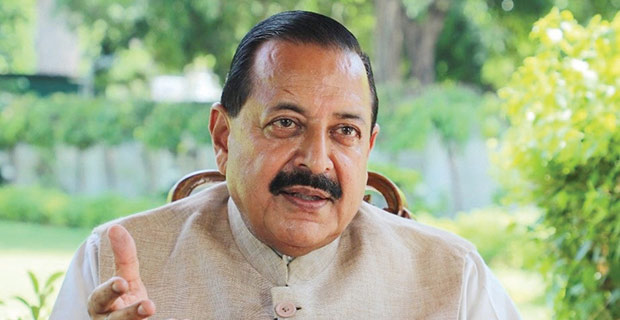
New Delhi: India’s space sector has witnessed over $600 million in private investment over the last five years, Union Minister of State Dr. Jitendra Singh said on April 26, as he undertook a comprehensive review of initiatives aimed at deepening and diversifying the country’s space ecosystem. The exercise was not merely a stocktaking, but a signal of intent — to consolidate gains and accelerate momentum in a sector that is rapidly opening up to enterprise and innovation.
At the heart of the review was a forward-looking plan to embed space science within India’s academic fabric. Singh assessed proposals to establish space laboratories across universities and colleges, with seven such labs slated for launch in the first phase. Envisaged as more than symbolic installations, these laboratories are designed to immerse students in the practicalities of satellite systems, rocketry, and mission design, thereby creating a robust and industry-ready talent pipeline for a sector that is expanding both in ambition and complexity.
The deliberations were informed by a detailed presentation from Mr Pawan Goenka, Chairman of IN-SPACe, who mapped the trajectory of India’s space reforms and highlighted the growing depth and breadth of private participation. What was once a tightly held sovereign domain is now witnessing the steady emergence of a multi-layered ecosystem, where private players are contributing across the value chain with increasing confidence and capability.
This transformation is most visible in the surge of startups, whose numbers have grown from single digits in 2019 to over 400 by early 2026. These enterprises are not confined to niche experimentation; they are actively engaged in building launch vehicles, manufacturing satellites, delivering data services, and developing ground infrastructure, while also venturing into emerging in-orbit technologies that signal the next frontier of commercial space activity.
To sustain and scale this momentum, the government has put in place a suite of targeted financial interventions. A Rs 1,000 crore venture capital fund, being operationalised with SIDBI, is intended to support growth-stage startups, while a Rs 500 crore Technology Adoption Fund seeks to bridge the critical gap between innovation and commercial viability. Complementing these is a seed fund scheme that offers grants of up to Rs 1 crore, along with mentoring support, to nurture ideas at the ideation and prototype stages. Together, these measures reflect a calibrated approach to funding the entire lifecycle of innovation.
Parallel efforts are underway to strengthen the human capital that will underpin this growth. Seventeen specialised training programmes have already been completed, certifying nearly 900 participants in domains such as satellite manufacturing, launch vehicle systems, and space cybersecurity. The proposed university-based laboratories are expected to further reinforce this foundation by integrating practical learning with formal education, ensuring that the next generation of professionals is equipped to meet the sector’s evolving demands.
On the infrastructure front, the roadmap is equally ambitious. New initiatives include a privately-led Earth Observation satellite constellation under a public-private partnership model, the development of a shared satellite bus platform tailored for startups, and expanded access to facilities at the IN-SPACe Technical Centre in Ahmedabad. These steps are aimed at lowering entry barriers, optimising resources, and enabling a more collaborative and competitive ecosystem.
Related News.
-

June 2026 Across Caribbean Shores
-

June 2026 INDIA’S SOUTH-CENTRAL AMERICAN ARC
-

June 2026 Minister Courts Investors
-

June 2026 VOICES OF PARTNERSHIP

India Empire TV


EDITOR'S DESK, Jun 2026
 Across continents and oceans, India is steadily building a new architecture of engagement, one founded on partnership, connectivity, shared prosperity and mutual respect. Whether in Latin America, the Caribbean, North America, Africa or the wider Global South, India’s diplomatic and economic outreach is increasingly defined by substance, scale and strategic purpose...
more...
Across continents and oceans, India is steadily building a new architecture of engagement, one founded on partnership, connectivity, shared prosperity and mutual respect. Whether in Latin America, the Caribbean, North America, Africa or the wider Global South, India’s diplomatic and economic outreach is increasingly defined by substance, scale and strategic purpose...
more...
Ads Spot


Comments.