

Building Manufacturing Ecosystems
As India sharpens its ambition to become a global manufacturing hub, the strength of its industrial infrastructure will be critical. In a conversation with Sayantan Chakravarty, Editor-in-Chief of India Empire, Dr. Yogesh Bhatia, Chairman & Managing Director of LML Group, speaks about the company’s evolution from a legacy mobility brand to building integrated industrial ecosystems through LML Realty. He discusses the PADMA Cluster project in Haryana, the importance of infrastructure-ready environments for MSMEs, and the broader vision of creating scalable manufacturing platforms for India.
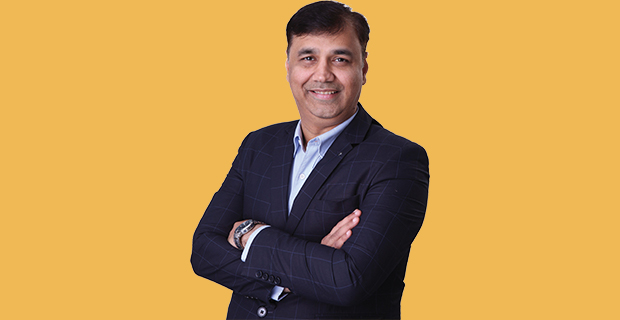
LML was historically known as a mobility brand. What drove the transition toward developing integrated industrial townships?
LML was built on manufacturing. That instinct to build systems that work at scale for India has not changed. What has evolved is the form it takes.
India’s industrial infrastructure gap is structural. Land is fragmented, utilities are unreliable, compliance is burdensome, and affordable yet well-governed industrial space is genuinely scarce. We saw an opportunity to address that directly. LML Realty is not a diversification. It is the same founding intent applied to a different and larger problem.
The PADMA Cluster at Jhirka Valley in Haryana has drawn considerable attention. How is it different from traditional industrial parks?
Most industrial parks offer a land parcel and a boundary wall. We are building a complete operating environment.
The PADMA Cluster, developed in association with the Government of Haryana, goes substantially further. It offers plug-and-play readiness from day one, including 18-metre wide RCC internal roads, assured 24/7 power and water supply, and a fully gated campus with three-tier security and comprehensive surveillance.
It also integrates ecosystem elements that conventional parks lack. Business development centres, exhibition facilities, common facility centres, worker housing, and hospitality infrastructure are all embedded within the master plan. Enterprises benefit from the entire ecosystem around them rather than operating as isolated units.
Equally important is policy alignment. MSMEs in the cluster can access more than ?2 crore in structured state incentives under the PADMA framework, including interest subsidies, SGST reimbursement, power tariff support, and export promotion assistance. Compliance readiness is also pre-delivered through clearances from DTCP, the State Pollution Control Board, and other authorities. This combination of infrastructure readiness, ecosystem integration, policy support, and regulatory clarity is what sets the project apart.
Why has an integrated model combining industrial space with housing, hospitality, and digital infrastructure become essential for MSMEs?
Because fragmentation carries a real economic cost.
When a manufacturer has to separately arrange land, utilities, worker housing, compliance support, and logistics connectivity, the overhead becomes significant and continues to compound over time. An integrated model eliminates that fragmentation.
Manufacturing, workforce housing, shared utilities, and digital infrastructure in one planned environment means lower indirect costs, better worker retention, and faster operational readiness. For MSMEs competing in global markets, infrastructure readiness is no longer a convenience. It is a competitive necessity.
How can a model like LML Realty’s industrial ecosystem help Indian MSMEs integrate more effectively into global supply chains?
Global supply chains demand consistency, compliance, and operational reliability. An MSME operating from an infrastructure-ready and policy-aligned industrial township enters those supply chains from a far stronger position.
Our model provides plug-and-play manufacturing spaces, shared utilities at cost, compliance infrastructure, and digital support systems. That allows enterprises to focus their capital and management attention on product quality, innovation, and market development rather than solving infrastructure problems.
In manufacturing, the foundation often determines the ceiling. Our aim is to strengthen that foundation.
In what ways does this initiative align with India’s broader ambition to become a global manufacturing hub?
India’s manufacturing ambitions will ultimately be realised at the MSME level or not at all. Large enterprises can build their own infrastructure. MSMEs rarely have that luxury.
By creating integrated, affordable, compliance-ready industrial ecosystems located on major expressway corridors and supported by state policy frameworks, we are enabling MSMEs to compete internationally. That is precisely what India’s manufacturing future requires: not just policy vision, but execution-ready infrastructure.
Related News.
-

July 2026 Trust Drives Trade
-

July 2026 “Rules Being Rewritten”
-

July 2026 Unitech Probe Deepens
-

July 2026 Infrastructure Delivers Savings

EDITOR'S DESK, Jul 2026
 Every edition of India Empire seeks to capture India’s expanding engagement with the world. This month, that engagement finds its strongest expression in our Cover Story on LAC FIRST, the India-Latin America & Caribbean Business & Diplomatic Conference, recently organised in New Delhi.
more...
Every edition of India Empire seeks to capture India’s expanding engagement with the world. This month, that engagement finds its strongest expression in our Cover Story on LAC FIRST, the India-Latin America & Caribbean Business & Diplomatic Conference, recently organised in New Delhi.
more...
Ads Spot

Comments.