

Digital World Home
From civilisational inheritance to sovereign infrastructure, the India AI Impact Summit in New Delhi became a rare global forum where political leaders and technology captains jointly framed artificial intelligence as the defining governance challenge of the century.
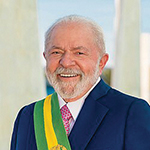 When Brazilian President Luiz Inácio Lula da Silva rose to speak at the India AI Impact Summit 2026 in New Delhi, he did not begin with algorithms, data centres, or productivity curves. Instead, he reached back more than two millennia, to an ancient Indian mathematician and the invention of the binary number system, declaring that the digital world had, in a sense, come home.
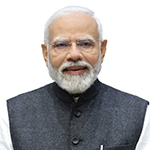 “Here in Delhi, the digital world returns to its homeland,” President Lula said, seated alongside Prime Minister Narendra Modi at Bharat Mandapam during the summit’s inaugural ceremony. The symbolism was deliberate. At a time when artificial intelligence is reshaping economies, politics, and power structures, Lula framed AI not merely as a modern technological breakthrough but as part of a longer human and civilisational continuum.
Binary Legacy And Power
For Brazil, Lula said, it was a privilege to participate in the Artificial Intelligence Impact Summit organised by the Indian government, and particularly significant that it was being held in the Global South for the first time. He described the moment as both historic and unsettling. The Fourth Industrial Revolution, he warned, is advancing at extraordinary speed, even as multilateral institutions and shared global frameworks are under strain.
In that context, Lula argued, the governance of artificial intelligence assumes strategic importance. Every high-impact technological innovation, he said, carries a dual character. Aviation, atomic energy, genetic engineering, and space exploration all expanded human capability while introducing new ethical and political dilemmas. Artificial intelligence, he suggested, belongs squarely in that lineage.
“Algorithms are not merely mathematical codes,” Lula cautioned. “They are part of a complex power structure.” Without collective global action, he warned, AI could deepen historical inequalities rooted in disparities of computational capacity, infrastructure, and capital. The concern was not abstract. In Lula’s framing, AI governance sits at the intersection of technology, democracy, and social justice.
Inequality Risks And Regulation
 On the sidelines of the summit, Lula met Sundar Pichai, CEO of Alphabet and Google, underscoring how closely political and corporate worlds now intersect in shaping AI’s future. The discussions ranged from Google’s investments in Brazil, including the opening of an engineering centre in São Paulo, to infrastructure partnerships and Brazil’s national Artificial Intelligence plan.
Lula later said the meeting also addressed concerns about the risks AI poses, particularly for girls and women, and the need for regulatory frameworks that protect creative industries and social interests. Google, he added, signalled its intention to deepen cooperation with the Brazilian government and expand private-sector engagement in the country.
The Brazilian President’s presence in New Delhi was itself framed as part of a broader diplomatic push. Sharing footage of his traditional welcome in the Indian capital, Lula said the visit aimed to strengthen bilateral ties, deepen partnerships, and contribute to shaping global conversations on artificial intelligence. In 2025, he noted, trade between Brazil and India crossed US$15 billion, a reminder that technology diplomacy increasingly rides on economic interdependence.
Related News.
-

March 2026 AFRICA FIRST - Corridors of Commitment
-

March 2026 Haryana Deepens Africa
-

March 2026 THOUGHTS ON INDIA AI IMPACT SUMMIT 2026
-

March 2026 DIPLOMATS AND INDUSTRY SPEAK
EDITOR'S DESK, Mar 2026
 At the heart of the March 2026 edition is AFRICA FIRST, the India–Africa Diplomatic and Business Conference presented by India Empire in New Delhi. Held on February 11 at the FIEO Auditorium, the gathering brought together ambassadors, diplomats, policymakers, business leaders and strategic thinkers under a shared theme: “India and Africa: Partners in Progress.”
more...
At the heart of the March 2026 edition is AFRICA FIRST, the India–Africa Diplomatic and Business Conference presented by India Empire in New Delhi. Held on February 11 at the FIEO Auditorium, the gathering brought together ambassadors, diplomats, policymakers, business leaders and strategic thinkers under a shared theme: “India and Africa: Partners in Progress.”
more...
Ads Spot

Comments.