|

|
|
UNBEATEN TRAIL
For the jaded tourist a dose of Trinidad, with its breathtaking beaches and rainforests, could be just what the doctor ordered to fire up all one’s six senses
|
|
|
With a shoreline just seven miles from Venezuela, the flora and fauna of Trinidad & Tobago have more in common with South America from which the islands separated a mere 10,000 years ago. Towering tropical rainforests, mountains and waterfalls, wetlands teaming with wildlife, and remote beaches where leatherback turtles create their own seasonal traffic jam are all on the menu of visitor experiences. Over 460 resident and migrant bird species have already made T&T one of the premier birding destinations in the world.
Unlike most Caribbean island nations hostage to tourism revenue, T&T’s economy is more healthily diversified with substantial exports of fruit, vegetables, sugar cane, natural gas and oil. Such economic diversity is allowing tourism to develop somewhat slowly, and hopefully in a more sustainable, grassroots manner than would otherwise be encouraged. Rest and relaxation mainstream tourists may choose to go elsewhere, but alternative travelers really have something to get their teeth into with these islands.
Trinidad, the most southerly island in the Caribbean Sea, is developing its remote area tourism, training local people to serve as guides and hosts for small-scale accommodation, and opening up access to some of the lesser-known parks and reserves for visitors with an exploratory streak.
The North Coast
Head out from Trinidad’s capital, Port of Spain in the northwest, you enter spectacular mountain terrain where the North Range literally drops to the Caribbean Sea. It is a region of tall, ancient rainforests and numerous waterfalls and rivers—in full spate or slow and meandering—that suggest spontaneous dips on a hot day or magical kayaking explorations. Near Avocat, plunge into the forest in search of birds, insects and butterflies, and emerge at a deep river pond carved out by a 70-foot waterfall tumbling over a cliff.
This is your introduction to the Marianne River which you will encounter again as it meanders into the sea on an exquisite, virtually uninhabited beach at Blanchisseuse. Here you can climb into kayaks, rented from the coffee shop owner there, and spend a couple of hours navigating the quiet waters and searching the canopy for wildlife.
Nariva Swamp
You shouldn’t miss the raised island-like Bush Bush area of the internationally-recognized Nariva Swamp wetland which occupies six square miles of the central east coast. It is Trinidad’s largest freshwater swamp. You can hear the howls of the Red Howler monkey as you enter the dense rainforest.
Grande Riviere
The mile-long fine sand beach in this village attracts 200 to 400 leatherback turtles a night during the peak egg-laying season (May through July). Owner-operated hotels and camping sites have sprung up to serve nature-loving visitors. At certain times, Grande Riviere is a traffic jam for both turtles and humans, with only the humans being subject to careful regulation by conscientious, well-trained local guides who take small groups along the shore at night to observe the egg-laying activity.
Like they say, never a dull moment in T&T.
|
|
|
|
|
|
|

|
|
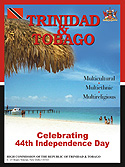
Trinidad & Tobago
|
|
Celebrating 44th Independence Day
|
|
|
|
|
|